Chad

UNHCR-solar.jpg

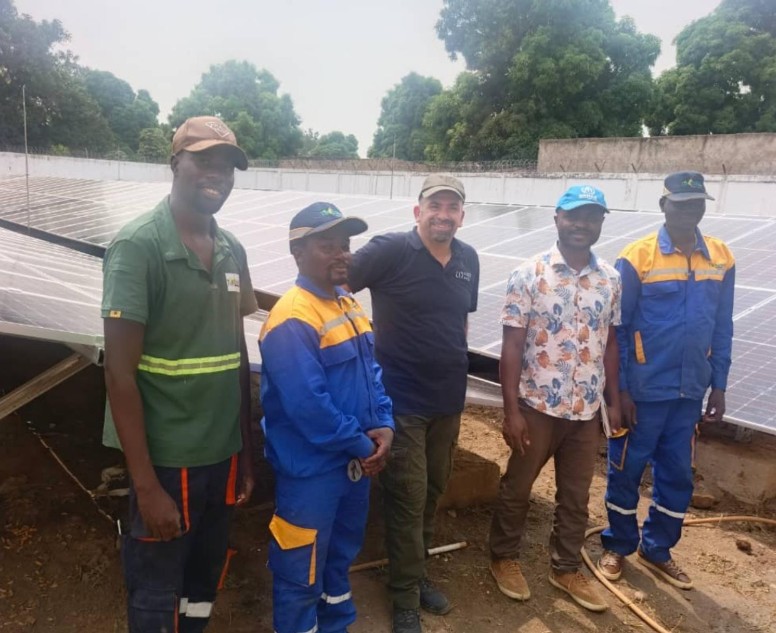
Project: UNHCR Solar Hybrid Microgrid Program, Republic of Chad
Service: Solar
Location: Baga Sola, Goré, Abéché, Farchana, Hadjer Hadid, Goz Beida, and Iriba, Chad
Client: UNHCR (UN Refugee Agency)
Partner: JGH Solar (Johs. Gram-Hanssen A/S)
Status: Commissioned 

Humanitarian energy infrastructure presents a fundamentally different set of engineering and logistical challenges than commercial or industrial solar: extreme remoteness, limited local supply chains, harsh operating environments, and a critical need for reliability where lives and essential services depend on continuous power. FREE energy took on exactly this challenge as part of the UNHCR energy program in the Republic of Chad, executing the installation, testing, and commissioning of solar hybrid power systems across eight remote sites, in partnership with JGH Solar. 

The completed portfolio spans Baga Sola, Goré, Abéché, Farchana, Hadjer Hadid, Goz Beida, the Goz Beida water pumping station, and Iriba, delivering a combined 1.47 MWp of solar PV capacity, 2.88 MWh of battery energy storage, and 1.27 MW of hybrid inverter capacity across the network. Each site-specific system combined solar PV modules with Dyness lithium battery storage and Solis three-phase hybrid inverters, integrated with the diesel generators already in operation at each location, enabling automatic hybrid switching between solar, battery, and diesel power based on real-time demand and generation conditions. 

FREE energy’s scope covered the full technical delivery chain: engineering coordination, procurement support, equipment installation, electrical interconnection, testing, startup, and final commissioning across all eight sites, a level of end-to-end delivery capability that is especially critical in a humanitarian energy context where remote support and rapid troubleshooting are often not readily available. The hybrid fuel-saving functionality built into each system also meaningfully reduces diesel consumption and associated fuel resupply logistics costs for these remote locations. 

This project is one of the most technically and logistically demanding engagements in FREE energy’s portfolio, bringing dependable power to humanitarian operations supporting displaced communities across Chad, and reinforcing FREE energy’s credentials as a partner for NGOs, UN agencies, and development organizations pursuing off-grid renewable energy solutions in Africa.

GSOL-energy.jpg

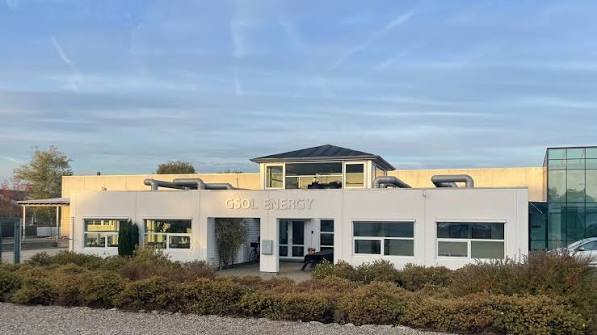
Project: GSOL International Healthcare and Humanitarian Solar Electrification Projects
Service: Solar
Location: Multiple countries (Ethiopia, Pakistan, Chad, Malawi, Burkina Faso, Somalia)
Client: GSOL Energy Global A/S, funded by UNICEF and UNDP
Status: Ongoing, multiple deployments at various stages 

Reliable electricity remains a significant challenge for healthcare facilities, humanitarian operations, and public institutions across Africa, Asia, and other developing regions, where limited grid access and harsh operating environments directly affect the continuity of essential services. GSOL has been implementing large scale renewable energy programs that provide resilient and sustainable power to critical infrastructure in this context, and FREE energy was commissioned to lead the project management and technical coordination of a portfolio of these international deployments, funded by organizations including UNICEF and UNDP. 

The portfolio spans multiple countries and encompasses standalone off-grid solar PV systems, hybrid solar diesel systems, battery energy storage systems, and large scale microgrids designed to provide reliable electricity for hospitals, healthcare facilities, humanitarian compounds, and other mission critical infrastructure. FREE energy manages every stage of project delivery, from engineering coordination, procurement, and logistics through construction management, commissioning, performance verification, and final handover, maintaining consistent technical quality across geographically dispersed and logistically challenging sites. 

Reported deployments include a decentralized healthcare electrification program across 380 facilities in Ethiopia (hybrid solar PV systems from 3 to 10 kWp with 10.24 to 25.60 kWh of battery storage, funded by UNICEF), 493 hybrid solar PV systems for healthcare facilities across Pakistan ranging from 5 to 30 kW with roughly 11.96 MWh of combined lithium battery storage (UNICEF), standardized hybrid solar systems across 23 healthcare facilities in Chad totaling 242.19 kWp of solar PV and 824.32 kWh of battery storage (UNDP), a containerized battery energy storage and hybrid solar plant in Malawi totaling 169.56 kWp of PV and 307.2 kWh of storage (UNDP), a containerized hybrid renewable system for humanitarian operations in Burkina Faso totaling 180.34 kWp of PV and 327.68 kWh of storage (UNDP), and hybrid systems for major healthcare facilities in Somalia including the Hargeisa Group of Hospitals and Jowhar Regional Hospital, with a combined capacity exceeding 210 kWp of solar PV and 440 kWh of battery storage (UNICEF). 

Beyond project implementation, FREE energy manages an expanding international service and O&M portfolio supporting installed renewable energy systems worldwide, covering engineering support, remote diagnostics, performance monitoring, corrective maintenance planning, service request management, spare parts coordination, and long term asset management. Overall, this portfolio demonstrates FREE energy’s ability to manage complex renewable energy programs across multiple continents, supporting humanitarian organizations in expanding access to clean, resilient, and dependable energy where it is needed most.