Lebanon

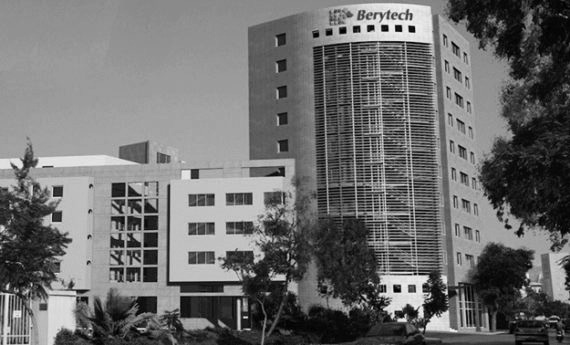
Berytech-mathaf.jpg

Project: Berytech Renewable Energy Cluster Feasibility Assessment
Service: Consulting
Location: Beirut, Lebanon
Client: Berytech
Status: Feasibility study and roadmap delivered 

Lebanon’s renewable energy market has expanded rapidly in response to electricity shortages, rising fuel costs, and increasing demand for reliable and efficient energy solutions. The sector nonetheless continues to face fragmentation, limited access to financing, regulatory uncertainty, inconsistent quality standards, and weak coordination between private companies, public institutions, research bodies, and international organizations. To assess whether a coordinated industry platform could address these gaps, FREE energy developed a comprehensive renewable energy cluster feasibility assessment for Berytech. 

The assessment examined Lebanon’s renewable energy ecosystem across solar energy, energy storage, wind power, and energy efficiency, combining market and regulatory analysis with stakeholder consultation across renewable energy companies, system integrators, manufacturers, suppliers, municipalities, public institutions, NGOs, and international development organizations. Particular attention was given to opportunities for collaborative research and development, improved access to finance, local product development, export market expansion, capacity building, and stronger public private coordination. 

From these findings, FREE energy developed a proposed structure and operating model for the cluster, defining its strategic objectives, governance and administrative arrangements, membership structure, potential fee model, resource requirements, and long term sustainability considerations. Proposed services included a shared R&D hub, market and technical information exchange, training and capacity building programs, joint business development initiatives, and coordinated advocacy for regulatory reform. The study also assessed implementation risks, including market fragmentation, member engagement, regulatory barriers, initial funding requirements, and the risk of duplicating existing industry organizations. 

The resulting roadmap phased cluster establishment across three stages: building the governance, membership, administrative, and funding foundations; launching core services and stakeholder collaboration groups; and expanding influence through policy advocacy, international partnerships, and large scale renewable energy initiatives. This project demonstrates FREE energy’s capabilities beyond individual installations, extending into renewable energy market development, institutional design, and sector wide strategy, supporting Berytech’s objective of a more collaborative, innovative, and internationally competitive renewable energy ecosystem in Lebanon. 

Energy-Globe-Award-1.png

Project: GIZ REEE Programme, Lebanon (Solar Street Lighting & Energy Efficiency Audits)
ServiceConsulting
Location: Lebanon, Bekaa region (Hawsh El Harimi, Baakline, Saghbine, Temnine El Fawqa, Machghara, Brital, Talya)
ClientGIZ (Deutsche Gesellschaft für Internationale Zusammenarbeit)
Program: REEE, Renewable Energy and Energy Efficiency
Status: Ongoing, launched August 2025, in progress as of July 2026 

Lebanon’s unstable national grid and rising fuel costs have turned energy efficiency and solar street lighting into a lifeline for public infrastructure, not a discretionary upgrade. Under its Renewable Energy and Energy Efficiency (REEE) work, GIZ engaged FREE energy as consulting engineer to deliver ASHRAE Level II energy audits and design solar street lighting (SSL) systems across multiple municipalities in Lebanon’s Bekaa region, supporting the country’s agricultural productivity, SME resilience, and community stabilization goals. 

The scope combines two complementary work streams. First, ASHRAE Level II energy audits assess building performance at public community centers in Baakline and Brital, identifying practical, low-cost conservation measures suited to public-sector budgets. Second, FREE energy designed solar street lighting systems for villages across the Bekaa area, including Saghbine, Hawsh El Harimi, Talya, Brital, Temnine El Fawqa, and Machghara, with FREE energy supervising the on-ground installation carried out by the program’s implementation contractors, restoring reliable public lighting in communities affected by grid instability and improving safety and quality of life. 

A representative case study from Hawsh El Harimi illustrates the scale of the problem: nearly 80% of existing street lighting fixtures were found non-operational. The proposed shift to standalone solar units is projected to deliver annual energy savings of 128,816 kWh and cut operating costs by roughly $34,780 per year, with a 7.2-year payback period, while also reducing emissions, improving public safety, and easing municipal reliance on grid electricity and diesel backup. 

As of July 2026, the program remains in progress. To date, more than 1,200 solar street lights have been installed under FREE energy’s design and supervision, benefiting 7 villages nationwide, alongside energy efficiency upgrades at 2 community centers that have achieved an average 69% reduction in energy consumption. As one of the most socially impactful engagements in its portfolio, this program demonstrates FREE energy’s ability to deliver development-cooperation energy consulting, spanning ASHRAE energy audits, solar street lighting design, and site supervision, in close partnership with international development agencies across Lebanon.


solar-banner.png

Project: IECD & Semeurs d’Avenir, Vocational Curricula for Energy Efficiency and Construction Trades
Service: Consulting
Location: Lebanon (delivered through IECD’s accredited partner technical schools nationwide)
Client: IECD (Institut Européen de Coopération et de Développement) and its Lebanese operational partner, Semeurs d’Avenir (SDA)
Status: Completed 

Building a capable energy-efficiency workforce takes more than transferring theory. Lebanon’s technicians need structured learning pathways that combine technical fundamentals, hands-on practice, workplace safety, and the ability to apply energy-efficiency principles on real installations. FREE energy partnered with IECD and its Lebanese operational partner, Semeurs d’Avenir, to design a set of nine competency-based vocational curricula strengthening Lebanon’s technical training system in energy efficiency and sustainable construction. 

The work was delivered across two engagements. The first focused on integrating energy efficiency into three construction trades: thermal insulation (100 hours), openings and sealing (200 hours), and plastering and cladding (200 hours). These beginner-level programs paired classroom instruction with substantially longer practical components, so learners would understand both the energy-performance principles behind each intervention and the correct methods of on-site execution. FREE energy coordinated directly with IECD’s pedagogical experts to develop the technical content and exercises in line with the Competency-Based Approach. 

The second engagement expanded the collaboration into six further technical specializations: Energy Audit Technician (70 to 100 hours), Electric Motor Control Technician (up to 100 hours), PV Maintenance Technician (100 to 150 hours), Home Automation Technician (up to 200 hours), Heating Efficiency (250 to 300 hours), and HVAC Efficiency (250 to 300 hours). Each curriculum was structured around the professional activities and competencies technicians actually need on the job, covering technical knowledge, installation and maintenance practices, energy-performance assessment, electrical and workplace safety, troubleshooting, documentation, and client communication. 

FREE energy’s role was to design and validate the curricula, not to deliver the training itself. Beyond the classroom materials, FREE energy contributed to the technical component of the Training of Trainers, took part in evaluating prospective trainers, and provided follow-up support once the programs were rolled out. This ensured the final curricula were technically accurate, practical, and teachable in the hands of IECD’s accredited partner technical schools, which carry out the actual classroom delivery across Lebanon. 

Together, the nine curricula span building-envelope efficiency, energy auditing, motor systems, solar PV maintenance, heating and HVAC efficiency, and smart controls, giving Lebanon’s vocational institutions a modern, market-aligned training toolkit. The collaboration demonstrates FREE energy’s ability to convert engineering knowledge into structured, implementation-ready educational content, helping IECD and Semeurs d’Avenir prepare a new generation of technicians capable of delivering safer, higher-quality, and more energy-efficient work across Lebanon’s buildings and technical sectors. 


Annahar-Solar.jpeg

Project: An-Nahar Media Group, Energy Efficiency and Solar EPC Pilot
Service: Solar
Location: Beirut, Lebanon
Client: An-Nahar Media Group
Program: TESSA, Energy Transition, Sustainable and Inclusive Economic Growth in Lebanon, led by ICU (Istituto per la Cooperazione Universitaria)
Status: Completed 

Lebanon’s prolonged energy crisis has driven up operating costs for businesses across the board, making energy efficiency and renewable energy investments essential for competitiveness and operational resilience. Under TESSA, a program led by ICU together with its partners, FREE energy was commissioned to provide technical engineering services for An-Nahar Media Group, one of Lebanon’s most prominent media institutions, selected as a pilot beneficiary to demonstrate practical Energy Performance Contracting (EPC) in the private sector. 

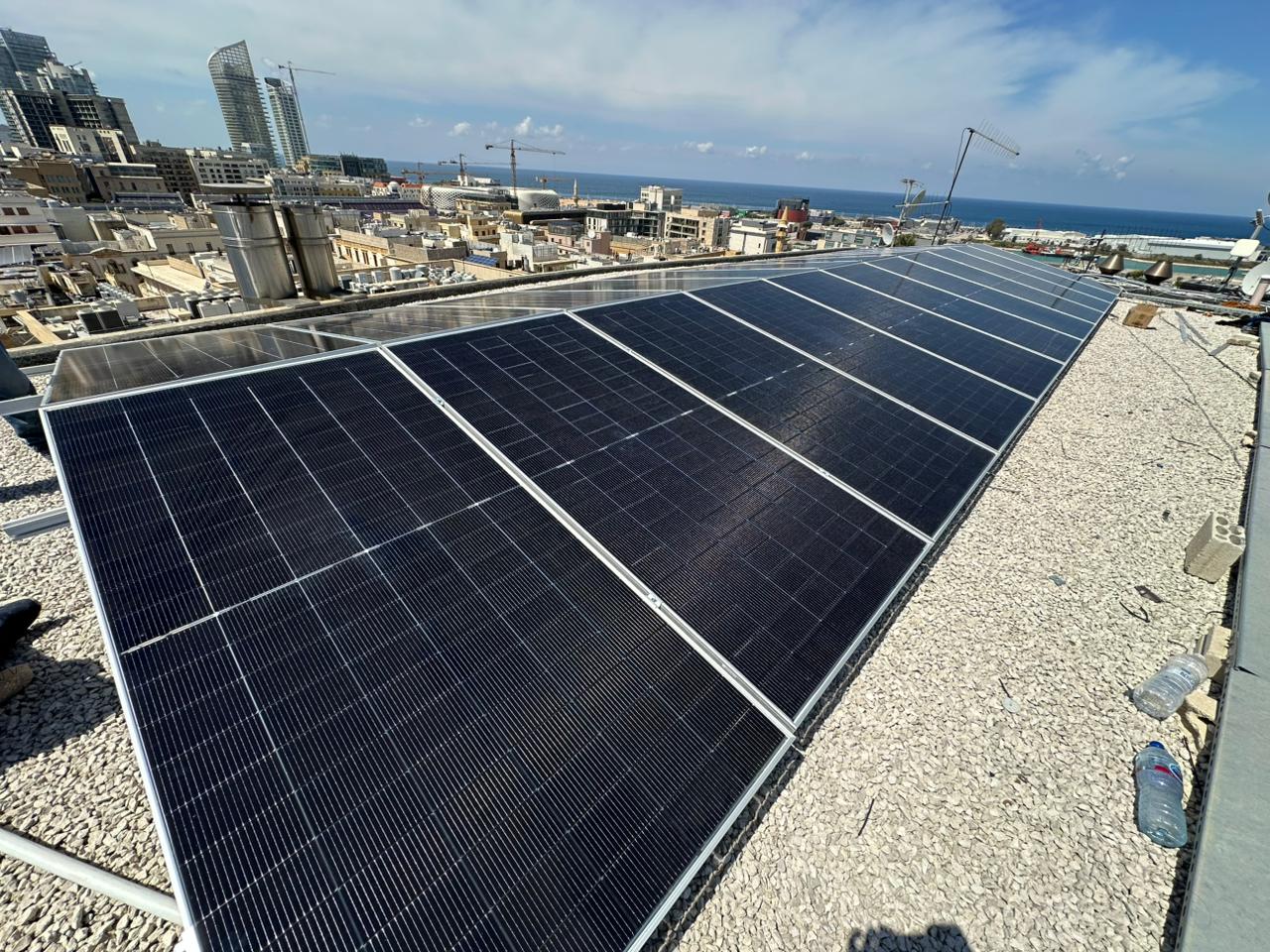
The project began with a comprehensive technical assessment of An-Nahar’s facility to identify opportunities for reducing energy consumption while maintaining occupant comfort and uninterrupted media operations. Based on the findings, FREE energy designed and supervised the implementation of a package of integrated Energy Efficiency Measures, including HVAC optimization through programmable thermostat controls, solar-control curtains to cut solar heat gain and cooling loads, water flow optimization valves, civil works for the archiving room, and scanners and IT equipment for digital records management, alongside the design and installation of an on-grid solar photovoltaic system to offset a significant share of the facility’s electricity demand with clean, renewable energy. 

FREE energy’s role spanned the full project lifecycle: engineering design, technical specifications, procurement support, implementation supervision, quality assurance, testing, commissioning, and final handover, with specialist installation contractors carrying out the physical works under FREE energy’s oversight. By combining multiple energy efficiency measures with on-site solar generation, the project delivered a holistic solution that lowers energy costs, reduces environmental impact, and builds a sustainability business case for Lebanon’s private sector. 

The An-Nahar project demonstrates FREE energy’s ability to turn detailed energy assessments into practical, implementation-ready solutions with measurable operational and environmental benefits, and highlights the company’s experience supporting Lebanese businesses through international development programs such as TESSA.


MoT.jpg

Project: Ministry of Tourism, Lebanon: Electrical Safety Inspection and Energy Audit
Service: Consulting
Location: Beirut, Lebanon
Client: Ministry of Tourism, Lebanon
Status: Completed

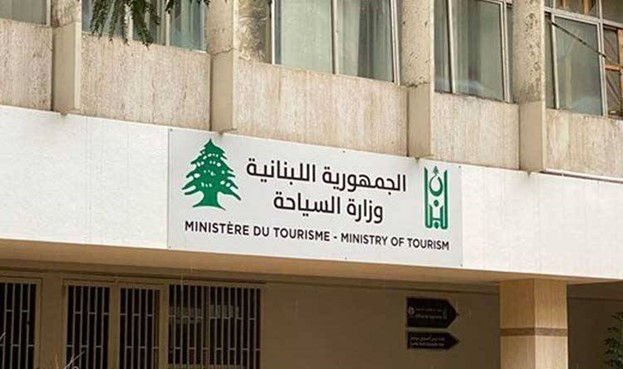
Government buildings in Lebanon often carry decades of deferred electrical maintenance alongside genuine energy waste, two separate problems that require two separate lenses to properly diagnose. FREE energy was engaged by the Ministry of Tourism to conduct a dual assessment of its Beirut headquarters, combining a full electrical infrastructure inspection with an ASHRAE Level II energy audit, giving the Ministry a single, prioritized view of both safety risk and energy-saving opportunity.

The electrical infrastructure review traced the building’s entire power distribution system, from the 15 kV intake down to the low-voltage panels, and identified six major safety risks, including oversized breakers, overheated neutral bars, and obsolete energized panels still in service. In parallel, the energy audit found the building relying on more than 110 non-inverter air-conditioning units alongside extensive outdated fluorescent lighting, with corridors and parking areas left continuously lit without any control systems. 

Based on these findings, FREE energy proposed replacing roughly 1,200 light fixtures with LED technology and upgrading the air-conditioning fleet to inverter-based units, alongside introducing lighting controls in areas with continuous, uncontrolled use. The most urgent findings were flagged as Priority 1 safety measures: de-energizing unused panels, replacing burnt breakers, and repairing neutral bars to eliminate active fire hazards. 

The engagement gave the Ministry of Tourism a clear roadmap for immediate safety upgrades alongside a pathway to long-term energy savings, combining urgent infrastructure repairs with efficiency-driven energy conservation measures in a single prioritized plan. 


solar-banner.png

Project: UNDP Lebanon, Energy Audits Long-Term Agreement (LTA)
Service: Consulting
Location: Lebanon, nationwide
ClientUnited Nations Development Programme (UNDP) Lebanon
Status: Ongoing, multi-year LTA  

Lebanon’s public sector has been severely impacted by the country’s prolonged energy crisis, with unreliable grid electricity and rising fuel costs placing significant financial and operational pressure on critical public facilities. Under a Long-Term Agreement with the United Nations Development Programme, awarded February 10, 2025 through tender LBN/CO/RFP/170/24 to multiple delivery partners including FREE energy, commissioned to conduct comprehensive ASHRAE Level I and Level II energy audits for public facilities across Lebanon, providing the technical foundation for future energy efficiency and renewable energy investments.

The audit program covers facilities nationwide, including military installations, government buildings, hospitals, police stations, prisons, and educational institutions such as th Lebanese University’s Hadath campus. At Hadath, assessments revealed deficiencies in HVAC systems, lighting, electrical panels, water pumping equipment, and the building envelope. Site assessments combine utility bill analysis, equipment inventories, operational assessments, and long-term energy monitoring through advanced data loggers, establishing facility-specific energy baselines and performance benchmarks used to identify practical, financially viable Energy Efficiency Measures tailored to each site. 

Recommendations are delivered as detailed, implementation-ready reports, including energy conservation measures, renewable energy integration opportunities such as LED lighting retrofits with occupancy and daylight sensors, chiller optimization, electrical distribution upgrades, and rooftop solar PV to reduce reliance on diesel generation, alongside preliminary system sizing, investment estimates, expected energy and cost savings, greenhouse gas emission reductions, implementation roadmaps, and photographic documentation for each audited site. These deliverables give UNDP and national stakeholders a prioritized portfolio of projects to improve energy security, reduce operating costs, and enhance the sustainability of Lebanon’s public sector. 

As of July 2026, the LTA remains in progress. As one of the largest public-sector energy audit programs undertaken in Lebanon, it demonstrates the consortium’s ability to deliver large-scale, ASHRAE-compliant energy assessments across a highly diverse, multi-site portfolio, combining rigorous engineering analysis, advanced energy monitoring, and practical implementation planning in support of Lebanon’s national energy transition, in partnership with UNDP.